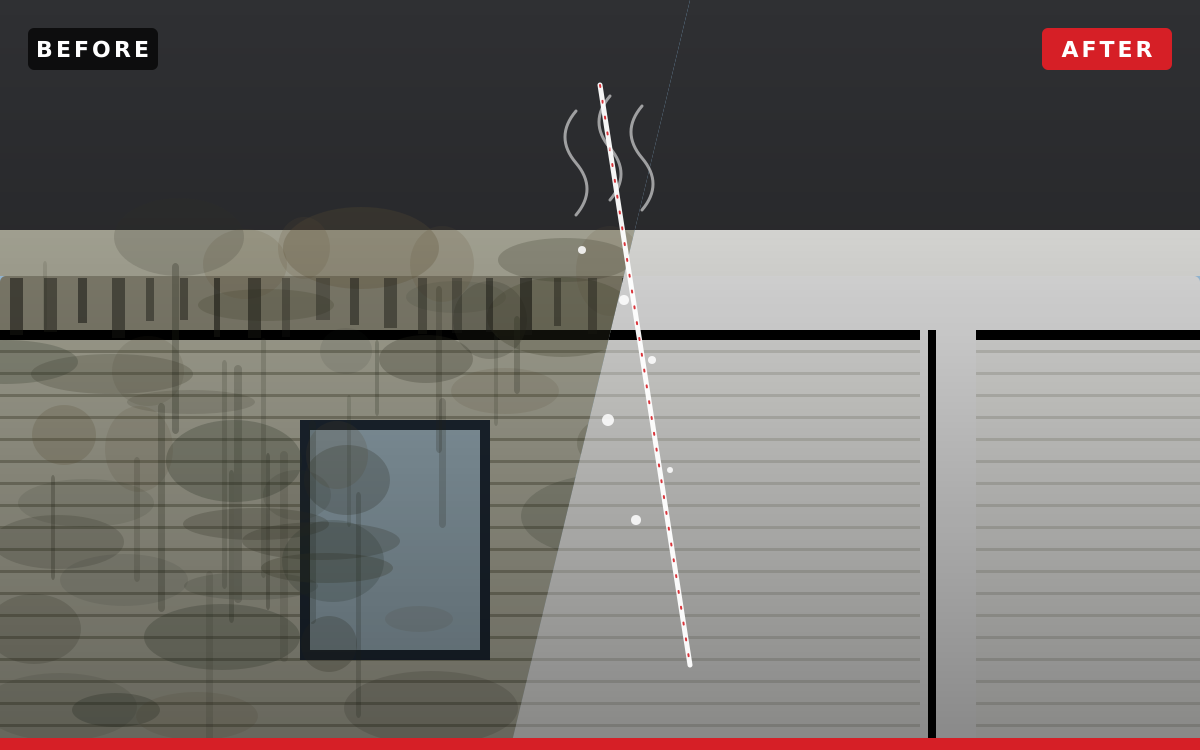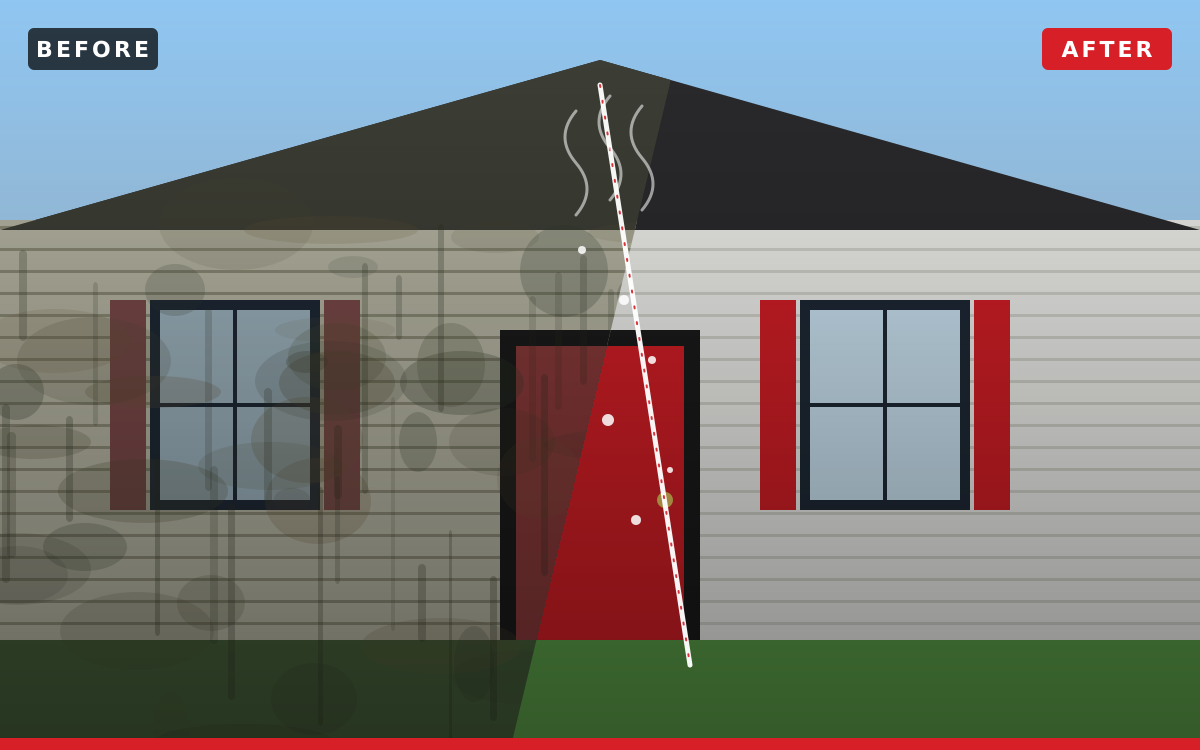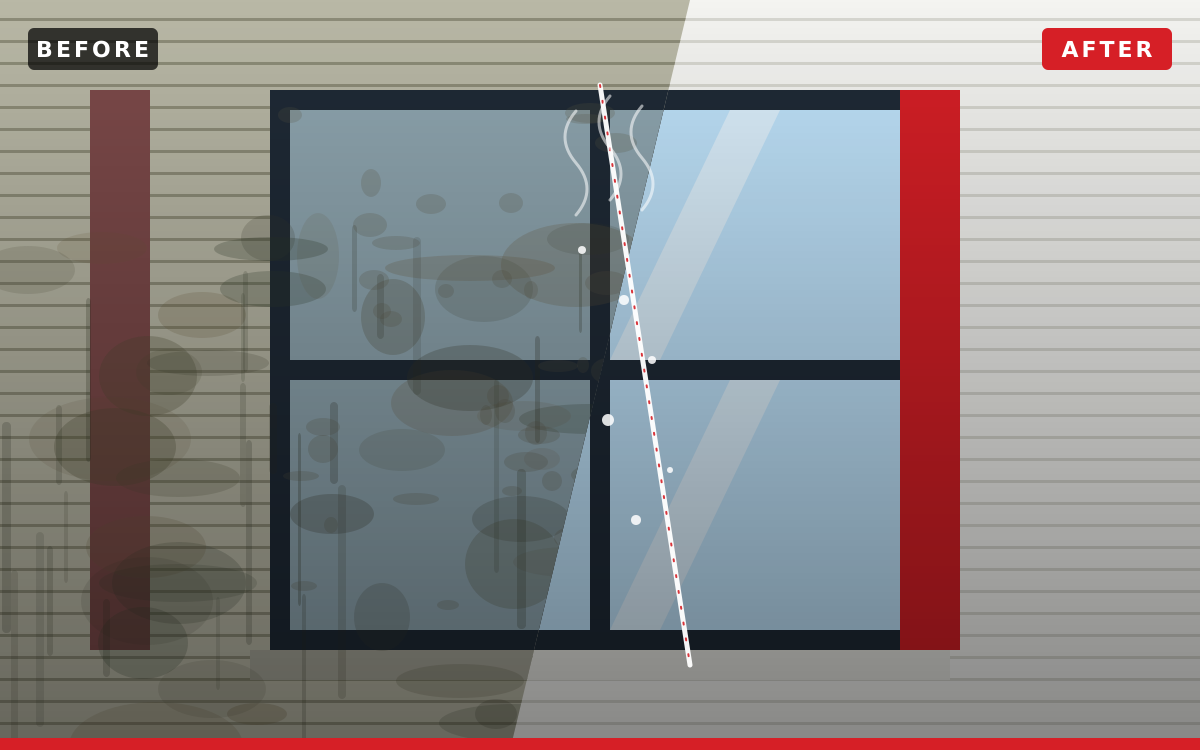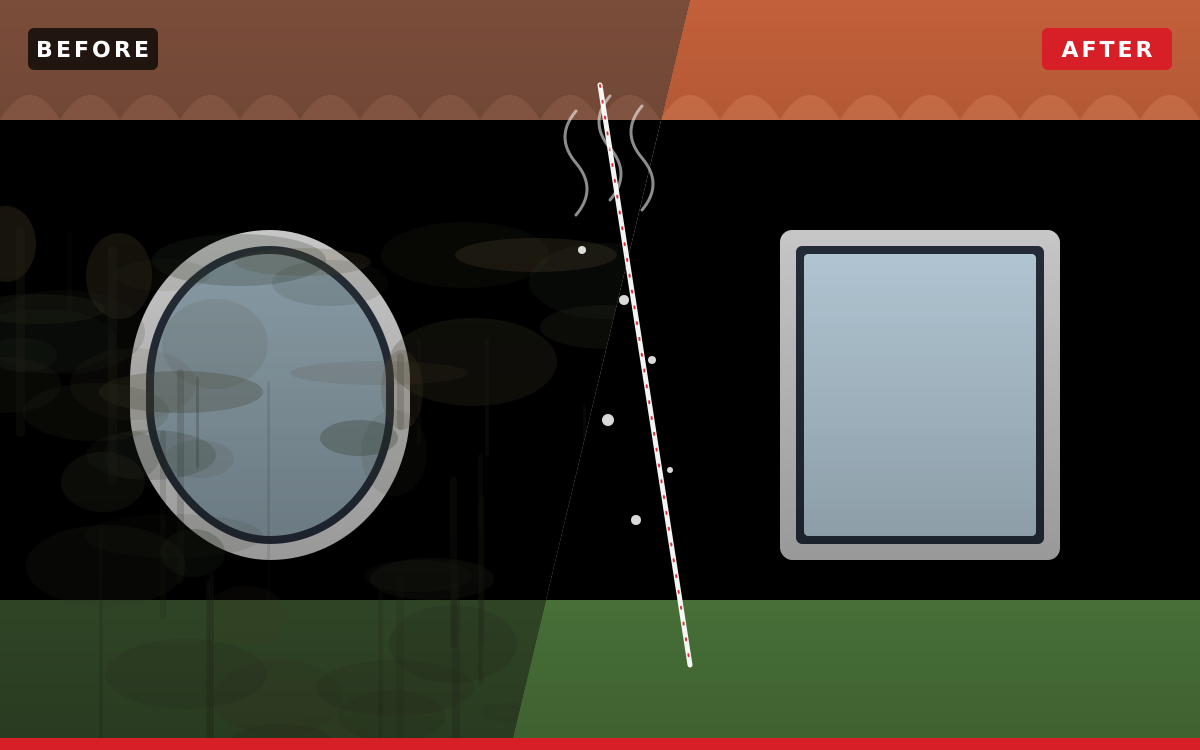
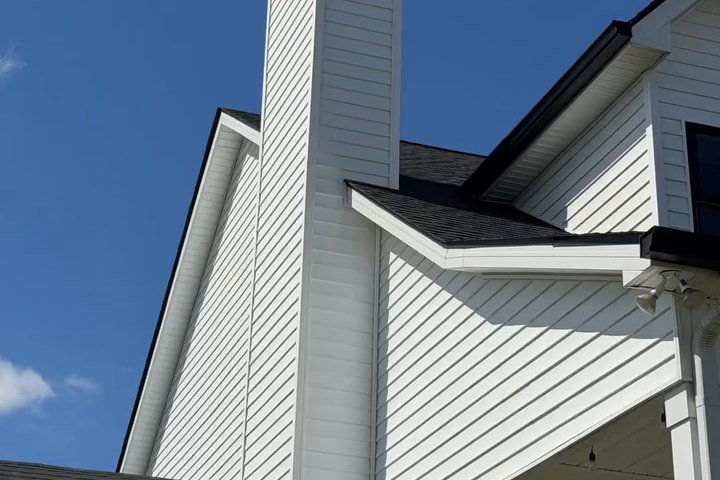
What those black streaks really are
The black or dark gray streaks on asphalt shingle roofs are caused by a type of algae called Gloeocapsa magma. It spreads on the north and east slopes where shade and moisture linger, and it feeds on the limestone filler in shingles. As it grows, it holds moisture against the roof, speeds up granule loss, and makes the roof absorb more heat. Green moss and lichen can also take hold, lifting and loosening shingles over time.
Because the algae is a living organism, simply blasting it with water does not solve the problem. It grows back quickly unless it has been treated at the root.
Why we never pressure wash a roof
Pressure washing a shingle roof knocks off the protective granules, shortens the life of the roof, and can void manufacturer warranties. Many shingle manufacturers specifically recommend against it. We use a low-pressure soft wash method to apply a cleaning solution that eliminates algae and moss, then rinse gently. There is no scraping, no walking hard on the shingles when it can be avoided, and no high pressure on the surface.
The result is a roof that looks years younger, with the added benefit that a clean, light-colored roof reflects more heat than a dark, streaked one.
Roof types and details
We soft wash asphalt shingle roofs, architectural shingles, metal roofs, and tile where appropriate. We protect landscaping with pre-wetting and rinsing, and we handle the details that often get missed: valleys, around chimneys, near skylights and vents, and the edges where the roof meets siding. For the gutters below, see gutter exterior cleaning, and for the walls below, see house washing.
What this removes
- Black algae streaks
- Moss and lichen
- Green growth in valleys
- Dirt and pollen film
- Stains from tree debris
- Dull, weathered appearance
Why it is worth doing
- Extends shingle life by removing the algae that feeds on them.
- Brightens the whole home and often looks like a roof replacement from the street.
- Safer for shingles than pressure washing.
- Helps reduce heat absorption on summer days.
- Costs a fraction of a replacement roof.
How we soft wash a roof
- AssessWe check shingle condition, previous repairs, and the level of growth to choose a plan.
- ProtectLandscaping is pre-wetted and covered where needed, and downspouts are directed away from beds.
- TreatA roof-safe cleaning solution is applied at low pressure and allowed to work on algae, moss, and lichen.
- RinseWe rinse gently and thoroughly, then rinse plants and surfaces below.
- Follow-upResults continue to improve over the following days as the treatment finishes working; we tell you what to expect.
Signs it is time
- Black or dark streaks are visible from the street.
- You see moss, especially in valleys or shady slopes.
- The roof looks much older than it is.
- You are listing the home or your insurer is asking about roof condition.
Make it automatic with a care plan
Roof soft washing can be added to any plan at your member discount. Plans start at $49 per month and include priority scheduling and member discounts on every other service.
Compare Care PlansFrequently asked questions
Will roof cleaning damage my shingles?
Not when done properly. Soft washing uses low pressure and a cleaning solution rather than force. Pressure washing is what damages shingles, and we do not do it on roofs.
How long does the roof stay clean?
It depends on shade, tree cover, and moisture. Many roofs stay clear for years. Heavily shaded roofs may need a refresh sooner.
Do I need to be home?
No. We need access to an outdoor water source and for gates to be unlocked. We will confirm everything when we schedule.
What about my landscaping?
We pre-wet and rinse plants, and take extra care near beds. If you have especially delicate plants, tell us and we will add protection.
How do I know if it is algae or damage?
Dark streaks that fade into lighter areas, usually on north-facing slopes, are typically algae. Bald spots, curling, or missing granules are shingle wear, not something cleaning can fix.